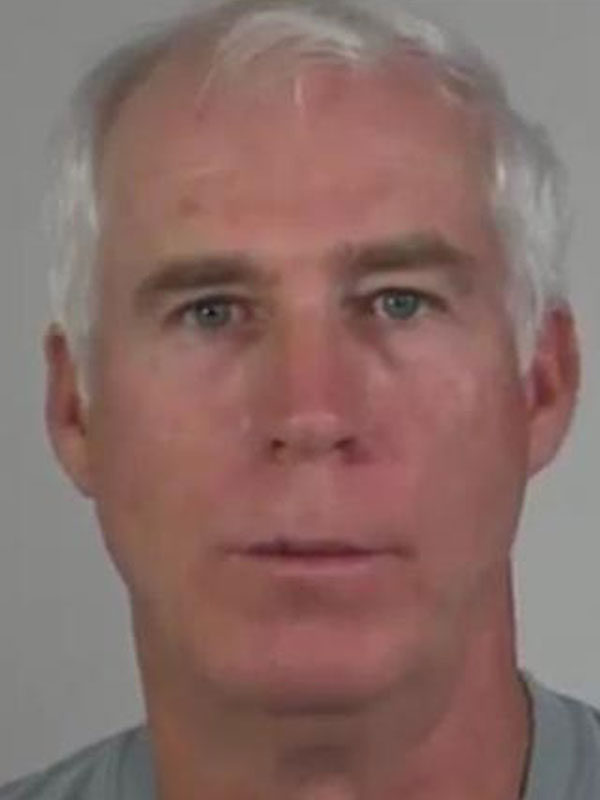
Art Friesz - Class of 1971
I am a 1971 graduate of Newark Catholic High School. Recently I attended my 55-year class reunion and was asked how I ended up in California. In 1977 I started working at an aerospace company in San Diego. In 1990 I was assigned as the Centaur Mission Integration Engineer for the Cassini Interplanetary space probe.
This is my story.
It all started in the third grade when we lived in Point Pleasant, West Virginia. In our reader there was a story titled “The Pearl” . The plot is not important but the life style of the people is what intrigued me. The people lived in the south pacific and the women went pearl diving while the men went fishing. They lived in teepees and they slept on mattes. I wanted that life style. I wanted to live near an ocean.
In the fourth-grade John Glenn was to be launched into orbit. Our teacher wheeled an old black and white tv into the classroom to watch the launch. The school was selling t-shirts with rockets on them. They were beautiful with orange and red flames underneath. I had to have one. They cost $1.50. I bought one and I treated it like gold. I decided I wanted to work on things that fly.
We moved to Newark where I attended Wilson Junior HS for 8th grade before moving over to Newark Catholic freshmen year. I knew just one person. I recognized her from speed reading class at the YMCA the previous summer. Near the end of the school year the football coach Matt Media asked me if I would be one of the equipment managers. I was too skinny to play football. It turned out to be a great way to meet people and gave me the feeling of inclusion. We traveled to all the games with the team. It was the best decision I made at Newark Catholic.
I always did well with technical courses but not so well with the humanities. English and history was a real pain. I can remember senior year English class with Sister Margaret when she assigned us yet another book to read. I never enjoyed reading and this book was real bad. It was titled “Vanity Fair”. I could only read the first chapter and then I couldn’t remember what the first few pages were about. I knew “CliffsNotes” wouldn’t be able to save me this time. When Sister Margaret noticed I wasn’t keeping up with the reading schedule she asked to see me in private to find out what the problem was. In the softest voice possible I told her “Normal people don’t read those kinds of books”. She gently smiled and then told me I could go the public library and pick any book I wanted and write a book report on it. I did just that. I don’t remember the title, but it was technical in nature. It was about how a radio works. I loved that book and I read it twice. My book report even had graphs. At the public school I was a number, at Newark Catholic I was a person.
I studied at the University of Dayton and became an engineer. My summer jobs were Oil well worker for Clinton Oil Co, a roofer for a sheet metal Co and an engineering intern at Owens Corning Fiberglas. I realized I didn’t want to work for a company that made parts. I wanted to work for a company that assembles parts to make big things that fly and I was going to live near an ocean. That meant the east or west coast. The east has poison ivy which I am allergic to so I went west. I set out in my VW Bug with a tent, a sleeping bag with a broken zipper, an interviewing suit, maps, some personal items and a credit card. It was the end of August 1976. I stayed in campgrounds to conserve money. At the time a campsite with showers ran $4 and a primitive site was $2. It’s funny but I never liked geography in school but now I was really interested.
After checking out the Rocky Mountains and the Great Salt Lake I was on to Lake Tahoe. Now that is a perfect place; crystal clear water surrounded by mountains. Next stop was Yosemite NP. I love that place and have visited it many times. San Francisco was great but nothing could match the pacific coastline. I traveled up and down that coast several times and I never got tired of it. In November I knew it was time to settle down and get serious about a job. I wanted to work in the aerospace field which meant Boeing in Seattle, Northrop in Los Angeles, McDonnell Douglas in Long Beach or General Dynamics in San Diego. I would pull up to a gas station and go into the restroom wearing shorts and flip flops and come out in a three-piece suit. I went with General Dynamics. The division I worked in made the Tomahawk cruise missile and the Atlas/Centaur launch vehicles. They built the nations first Intercontinental Ballistic Missile (ICBM). It was called the Atlas. Over 100 of them were placed in underground silos mostly in the center of the US and all had Nuclear warheads aimed at the USSR.
Russia had their version aimed at us. The contract for the second-generation ICBM (Titan II) was awarded to Martin Marietta. The time from a launch order to actual launch was much shorter. The propellants were room temperature and could be stored on the missile but they were very toxic and dangerous to be around. A young airman from Heath, Ohio died in an explosion involving a fuel leak in one of those missiles. You can read about it in the library book “Command and Control, Nuclear Weapons …” by Eric Schlosser. The risks our armed forces personnel take are incredible.
The Air Force had to figure out what to do with the now obsolete Atlas ICBMs. Many were destroyed until someone got the idea to use them to launch satellites out of Vandenberg AFB. This project was well under way when I joined the company. I was responsible for the propellant utilization system. It consisted of sensors in each propellant tank, a computer and a engine valve used to adjust the mixture ratio. This assured maximum performance of the available propellants.
I would make three trips to Vandenberg for each launch. I was in the blockhouse for each of these. We were told the building could take a direct hit and survive. The countdown took about eight hours starting with weather balloons checking for wind shears that could adversely affect the missile. At T 70 seconds the launch conductor would announce on the net, “Final commit will start on my mark”. At T-60 seconds the word “Mark” was heard and everything got very quiet. A lot happened in that last minute. Propellant tanks are brought to flight pressure levels to withstand the loads in flight, electrical power is switched from ground to onboard batteries, and the self-destruct system is armed. At this point the range safety officer could send a signal to destroy the missile if it veered outside a predetermined corridor. Populated areas were Lompoc, Santa Barbara, Los Angeles and San Diego.
During one of those trips to Vandenberg, I was standing in the gantry and I realized that Atlas missile was like the one on the T-shirt I saw in the fourth grade. John Glenn’s missile was also an Atlas. His was man rated meaning it had an escape rocket on top to pull his space capsule safely away in the event of a catastrophic event during launch.
After 12 years of launch support I transferred to the Mission Integration group. I was assigned the Centaur mission integration engineer for the Cassini interplanetary spacecraft. This was a five-year assignment and is considered unusually long. This spacecraft was going to the planet Saturn and to get there it flew a trajectory to pick up a series of gravity assists by traveling to Venus-Earth-Jupiter and finally arriving at Saturn seven years after launching on a Titan IV/Centaur missile. To make that work the launch date was chosen when the planets were aligned just right. The launch window was only a few weeks long and then the next opportunity would be a few years later if I remember correctly. Hence the expression “The planets wait for no man”. Cassini was a very heavy spacecraft, used three nuclear power sources called RTG’s that emitted radiation and required a lot of analysis and planning to keep personnel safe. I got a kick out of the movie “The Martian” staring Matt Damon. He was stranded on Mars and somehow got one of these RTG’s on the passenger seat of his little rover to take to his base. The radiation would have killed him but that is Hollywood.
Four years into the integration cycle for Cassini I was faced with a big decision. The division of General Dynamics I worked for was sold to Martin Marietta and then merged with Lockheed to become Lockheed Martin. I had to choose between the ocean or Denver. I picked the ocean. I became a software developer, and I still work at that. Long ago I learned if you retire you could die. I want to live!


