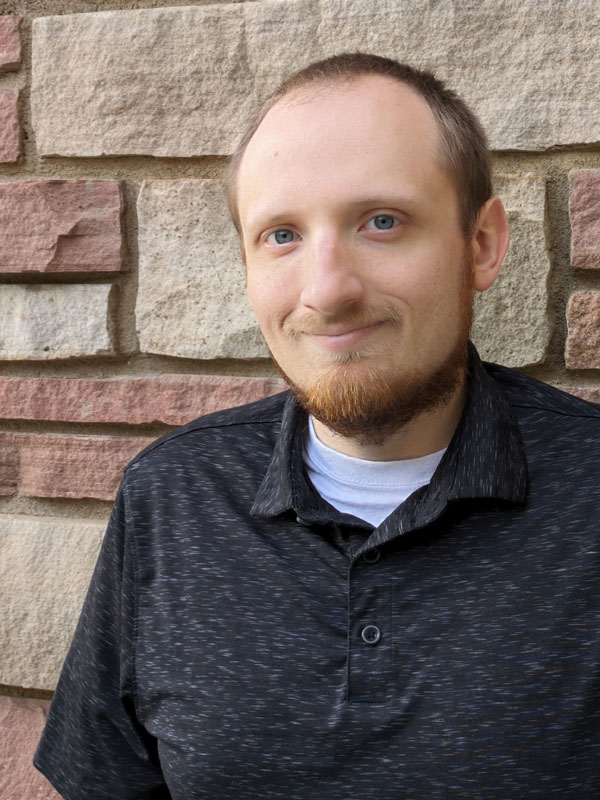
Charles Wade - Class of 2017
I graduated from Newark Catholic High School in 2017, while its STEM program was expanding. I helped found the school's robotics team and was in the very first engineering-for-robotics class. We competed in FIRST Robotics, where we had to design and build a robot that could perform specific tasks. That meant figuring out things like arms to lift objects or mechanisms that could pick them up and move them around. Those designs weren't always easy to imagine, especially when something that looked right on a computer screen failed as soon as we built it. Having access to the school's first 3D printer made a huge difference. We could print a part, try it out, see what went wrong, and change the design. Sometimes we worked through a dozen versions before one finally did what we wanted. Seeing those ideas take shape helped me understand engineering in a way that stuck with me.
Robotics was what first drew me toward engineering. At Newark Catholic, a student-led high-altitude balloon project that reached the edge of space sparked my interest in science. It was exciting to see an idea from the classroom turn into a real experiment. Just as important were the people who made those projects possible. Our teachers and robotics mentors included parents and professional engineers I never would have met otherwise. They took our ideas seriously, made time to work alongside us, and encouraged us to keep trying when something didn't work. That kind of mentorship gave me the confidence to take on projects that, at the time, seemed far beyond what I knew how to do.
The 3D-printing and robotics skills I learned at Newark Catholic directly helped me get a job in the makerspace at the University of Toledo, where I went to study computer science and engineering. I spent much of my undergraduate career helping other students use the equipment, make prototypes, and turn their own ideas into physical objects. Those skills also helped me earn a research internship at Oak Ridge National Laboratory. I later joined Oak Ridge as a researcher, developing software for some of the largest 3D printers in the world. I was writing code to help those machines build complex objects efficiently, which brought together my interests in computers and making things. One of the projects I got to work on was a team effort that 3D-printed a prototype lunar rover wheel for NASA. It was an incredible opportunity, especially considering that I had started out learning those same technologies in high school.
Today, I'm a PhD candidate in computer science at the University of Colorado Boulder. My research focuses on software that helps engineers make better use of advanced 3D printers, especially machines that can combine different materials within a single part. I still love the moment when a digital design becomes something physical. Some of our work supports realistic medical training models that let doctors and first responders practice procedures without involving a real patient. These models can also recreate rare injuries or medical conditions, giving first responders a chance to prepare for situations they may never have encountered before.
Alongside my PhD research, I've helped launch and develop FORTIFYD, a startup where I serve as lead software engineer. We use specialized 3D-printed structures to develop helmet liners that we hope will make sports and outdoor activities safer. Our team recently won $200,000 in funding through CU Boulder's Lab Venture Challenge, a pitch competition supporting new technologies developed at the university. Along the way, I've authored more than ten scientific papers, hold two patents, and have had the chance to present my research all over the world.
One of the most rewarding parts of my work now is mentoring students in the lab and helping them discover what they can build. I hope to become a professor, partly because I remember how much it meant to have teachers and mentors take my ideas seriously and give me room to experiment. I believe that a path into STEM can start with something as simple as a project that sparks curiosity, the tools to try it, and people who encourage you to keep going. I'm grateful Newark Catholic gave me those opportunities.


